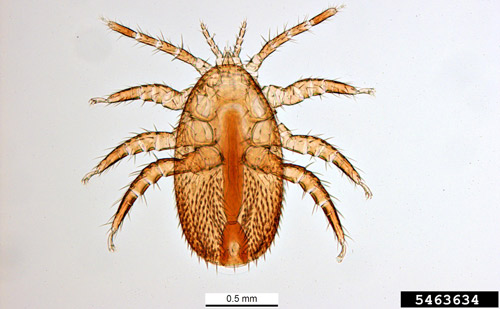
Tropilaelaps mercedesae is emerging as a major threat to the western honey bee, Apis mellifera, and its recent detection in Eastern Europe (Russia and Georgia) has raised concerns and interest about the parasite’s spread.
Understanding how mites move within and between bee colonies is key to predicting their impact on beekeeping. Previous studies in tropical regions showed that mites can spread through foraging bees, but little is known about this process in temperate climates.
A new research, published on the Journal fo Economic Entomology studied mite dispersal during a natural swarming event in Georgia. In this study 8 female mites left the original colony with the swarm; 4 died within a week, while the others 4 entered in the honeybee brood cells, and 2 of them successfully reproduced. These results show as swarming could be a possible way for mites’ dispersal, potentially enabling rapid expansion. Further research will be necessary to understand the phenomenon, and the attention of beekeepers and authorities must remain high.
Read the scientific paper’s full text here.