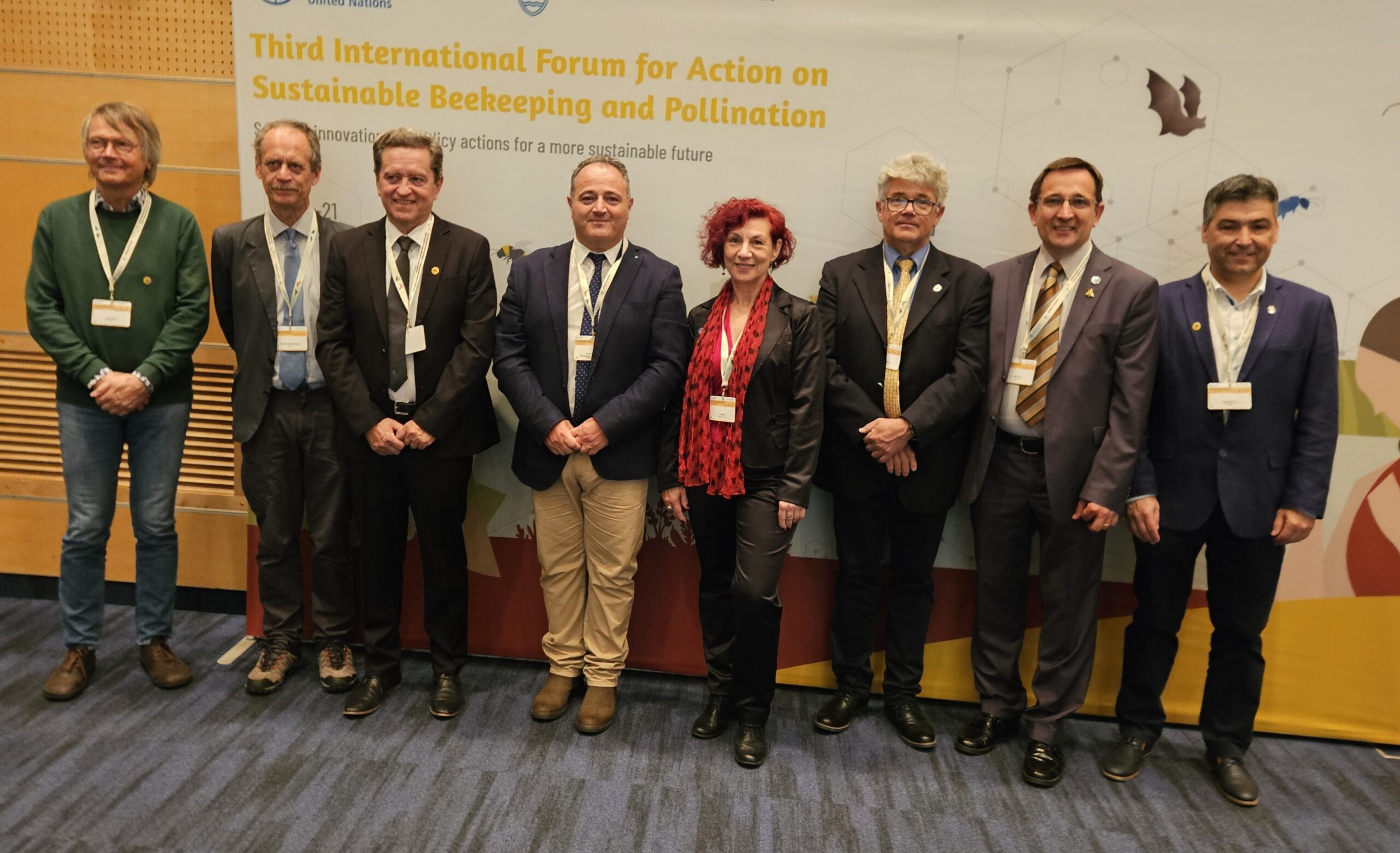
On the occasion of World Bee Day (20 May), FAO and Ministry of Agriculture, Forestry and Food of Slovenia, in collaboration with APIMONDIA, organised the 3rd International Forum for Action on Sustainable Beekeeping and Pollination, a 2-day event, 20th and 21st of May 2026, in Maribor, Slovenia.
This is an ongoing effort for sustainable beekeeping and the protection of pollinators.
Because: Bees and other pollinators play a crucial role in ensuring food security, preserving biodiversity and maintaining the resilience of ecosystems.
Because: Beekeeping is an important activity for livelihood as well as to produce high-value products.
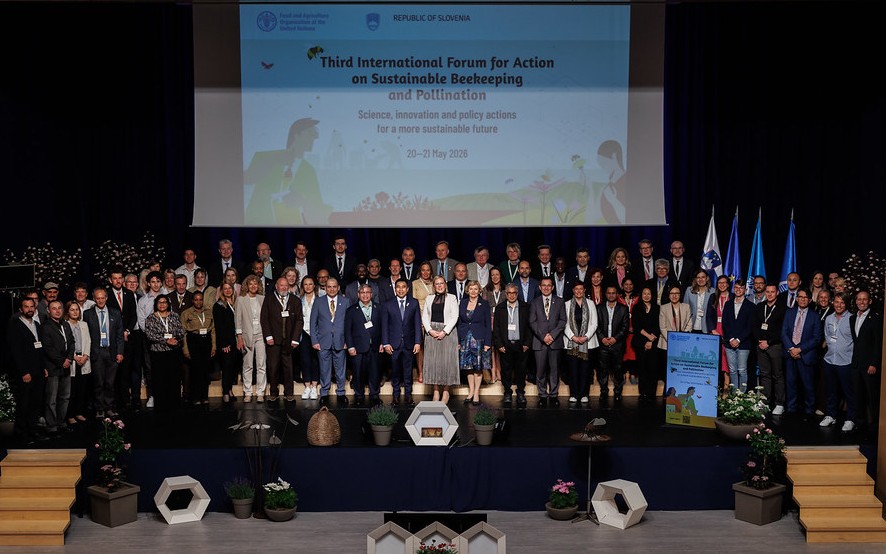
The 3rd Forum included discussions on the sustainability of beekeeping, the protection of pollinators, the establishment of the Global platform for pollinators, and the current challenges on honey quality and trade. The Forum achieved broad global representation, bringing together participants from Peru, Tanzania, Nepal, India, Egypt, Saudi Arabia, Germany, Hungary, Slovenia, the UK, Italy, Portugal, Greece, Belgium, Argentina, and many other countries, giving voice to international organizations, government agencies, research institutions, as well as beekeeping and agricultural associations.
The event proved to be a valuable platform for sharing good practices and professional expertise, where participants presented experiences from their countries on pollinator protection, the enhancement of beekeeping activities, the development of sustainable beekeeping methods, citizen engagement in pollinator monitoring, and efforts toward land regeneration. It also highlighted the need for greater cross-sectoral and global collaboration, increased research, stronger regulatory frameworks, and the adoption of innovative solutions, alongside further efforts to raise public awareness. Once again, it became clear how vital beekeeping is for livelihoods and the production of high-quality products for food, medicine, and cosmetics.
During the event, there was a live connection from Rome, where a special exhibition was inaugurated in the FAO Museum and Network by FAO Director-General QU Dongyu and Franc But, Slovenia’s Ambassador to the Holy See in the Vatican and Permanent Representative to FAO in celebration of World Bee Day.
FAO Assistant Director-General, Thanawat Tiensin, said: ”This Forum brings together a wide range of stakeholders. Because protecting pollinators and supporting sustainable beekeeping is a shared responsibility. And only together can we succeed.”
In her opening address, the Minister of Agriculture, Forestry and Food, Mateja Čalušić, said: “Slovenia is a land of beekeepers, the Carniolan honeybee, and rich knowledge passed down from generation to generation. At the same time, we also want to be a country of modern solutions, research, international cooperation, and the integration of various sectors – from agriculture and science to education and environmental protection.”
Apimondia Acting President, Peter Kozmus, said: “It is important to point out that bees have been facing numerous challenges in recent times: pesticides, global climate change, and the disappearance of their natural habitats. Because of all these factors, people must come together to ensure that we preserve bees for the future. This is the main message of World Bee Day, which we want to share with as many people as possible: that each individual decides to do a little more for pollinators in the years ahead.”
During the 2nd day of the event, honey market, economic anomalies and fraud were discussed with significant contributions from Apimondia members.
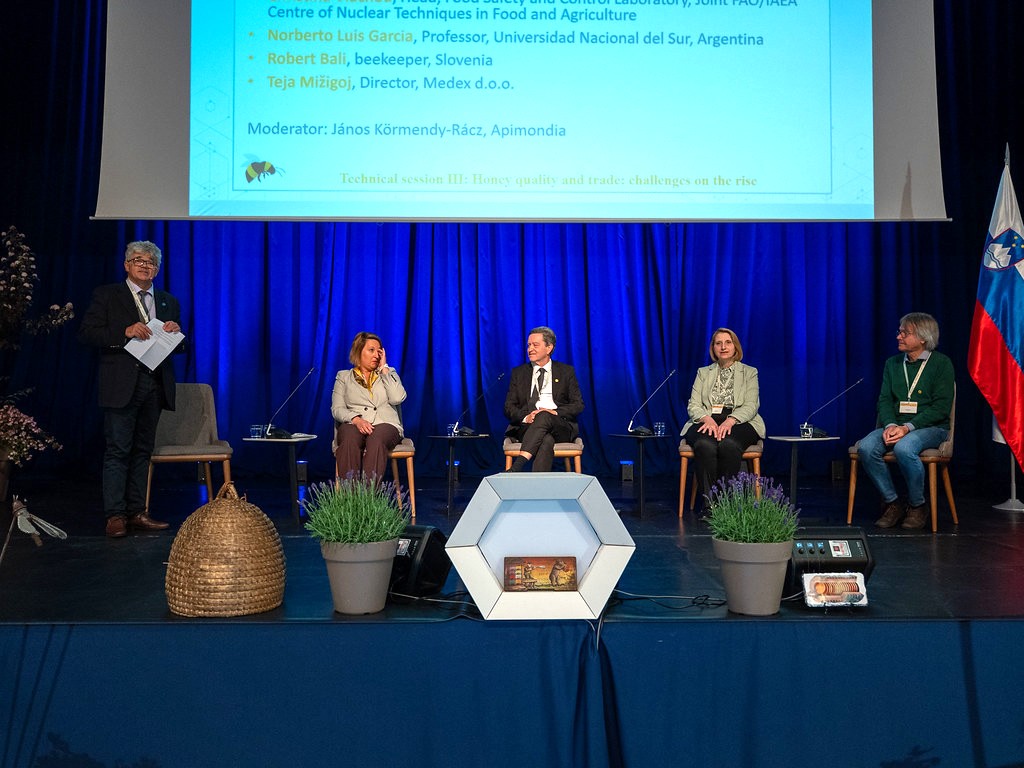
The discussion highlighted the need for a multi-pronged approach to addressing honey fraud, combining existing detection tools with complementary methods such as traceability systems, auditing, and the monitoring of economic anomalies to strengthen enforcement across the supply chain. Participants emphasized that such monitoring can help authorities prioritize testing and verification, particularly in smaller-scale operations where cost-effective solutions are essential. A key priority is the development of a coherent legal and regulatory framework with consistent enforcement across countries. The discussion also underlined the importance of consumer trust and protection as a foundation for the sector’s long-term sustainability, supported by greater public awareness, education for decision-makers, and improved transparency regarding the real costs of honey production. Overall, there was a clear call for urgent action to safeguard the economic viability of beekeepers and strengthen the integrity of the honey market.