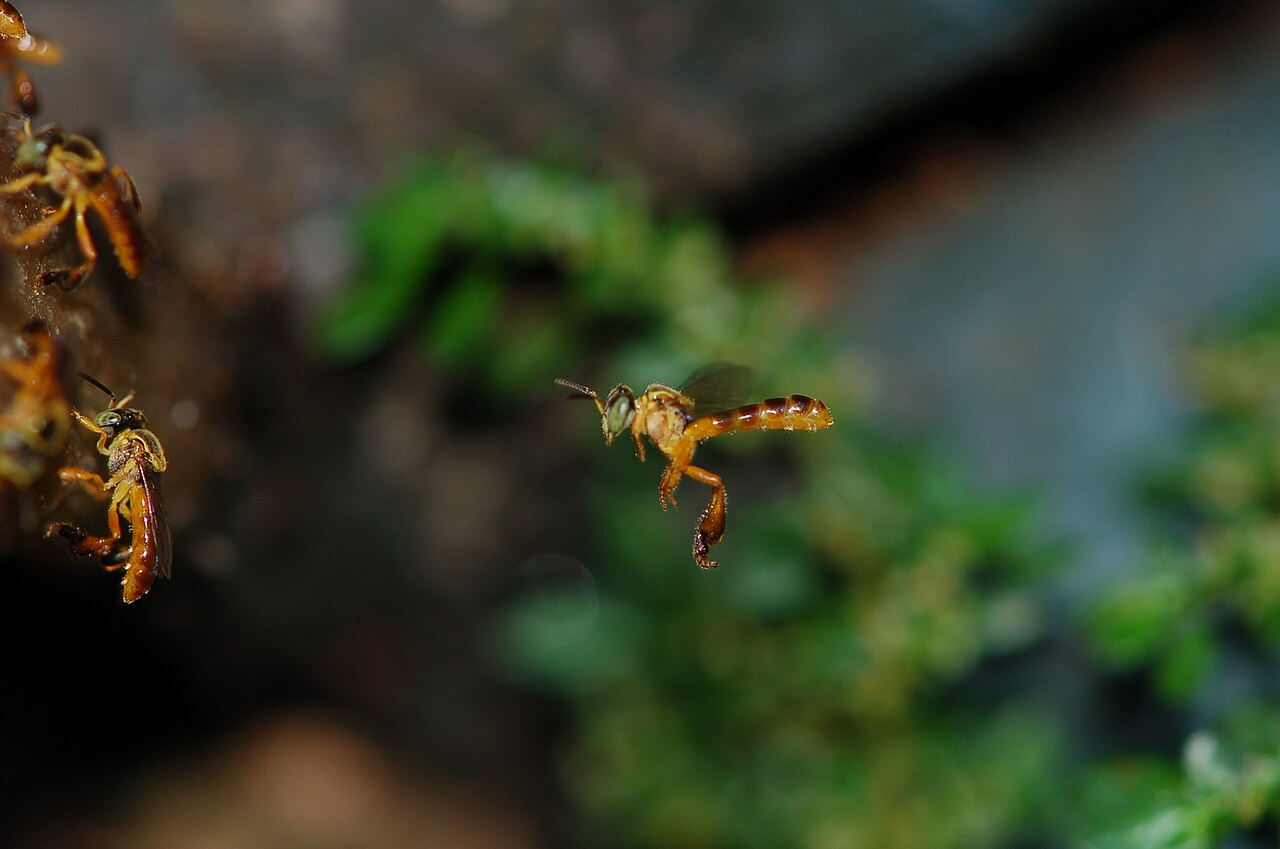
An municipal ordinance of Satipo, a province in central Peru, has recognise legal rights to the amazonian stingless bees of the Meliponine tribu, as Melipona eburnea, Tetragonisca angustula, Melipona illota, and Melipona grandis.
According to the Earth Law Center – a nonprofit organization working to give nature a voice in the legal system, which collaborated to achieve this goal – Peruvian stingless bees are the first insects in the world to be granted legal rights.
As stated in the ordinance, the stingless bees of the Avireri VRAEM Biosphere Reserve in the Peruvian forest will have:
- The right to exist and maintain a healthy number of colonies
- The right to sustainable climatic conditions
- The right to a healthy environment, free from contamination and other human impacts that could cause physical or health damage
- The right to the natural biodiversity of native flora, without invasive species
- The right to fulfill their ecosystemic role and to maintain and regenerate their biological cycles and evolutionary processes
- The right to the regeneration and restoration of their habitats
- The right to exercise their own rights and legal interests
Today, stingless bee colonies are threatened by deforestation, habitat loss, pesticides and climate change.
The threat to stingless bees is also a threat to Indigenous communities and their knowledge, as well as to the balance of the entire forest, where the stinglessbees are a fundamental ecological pillar.
This ordinance is the result of work that integrates scientific research, traditional knowledge, and the rights of nature into a single tool, and it can be used immediately to take action against activities that threaten the colonies and their environment.
Among the initiatives linked to the protection of bees there are: the first survey of wild stingless beehives in the area; the initial recording of Ashaninka traditional knowledge related to the species; the development of the first Ashaninka Biocultural Community Protocol; and the documentation of sustainable practices for beekeeping and bee conservation.
By protecting bees, their entire ecosystem is protected, encompassing both natural and cultural dimensions.
As Costanza Prieto – of the Earth Law Center – has noted: “This ordinance marks a turning point in how we understand and legislate our relationship with Nature.”
This represents a true milestone in the conservation of bees and the environment.