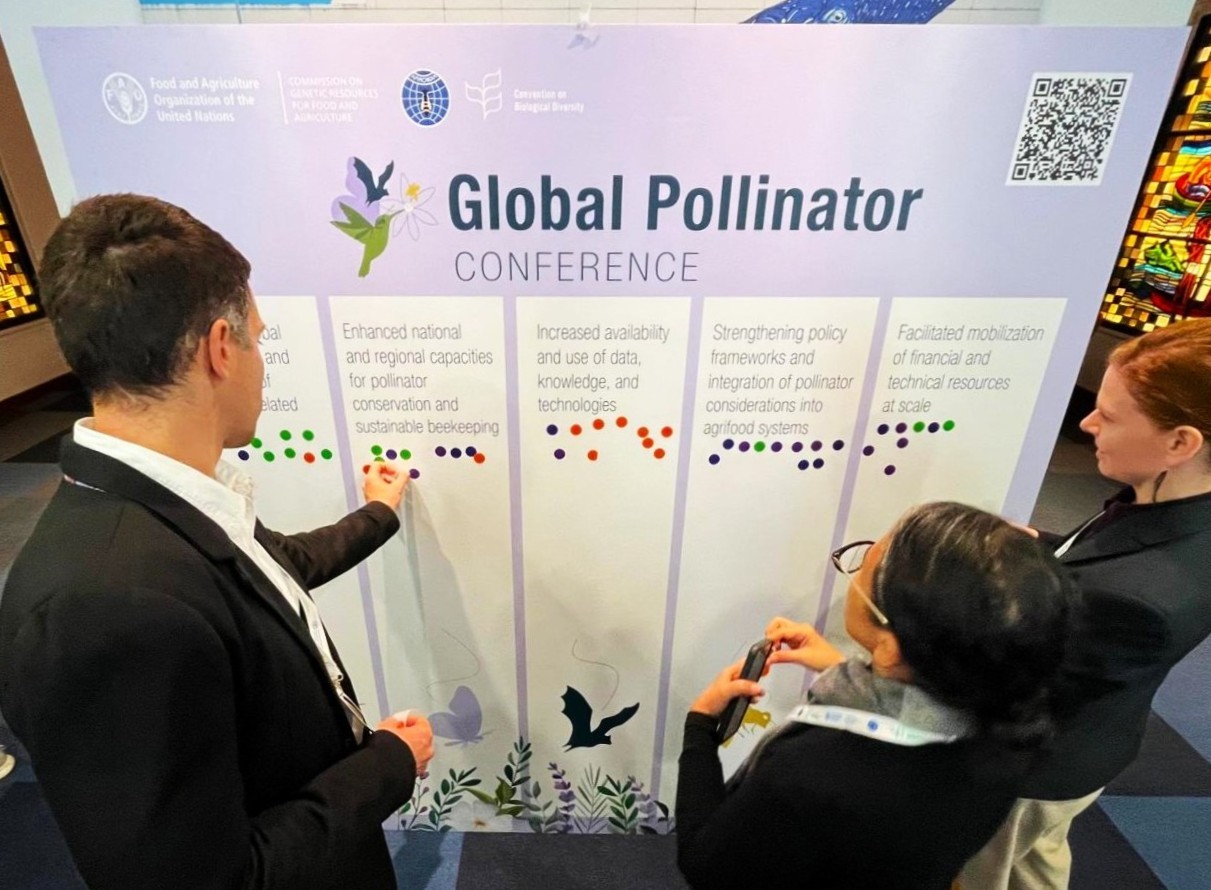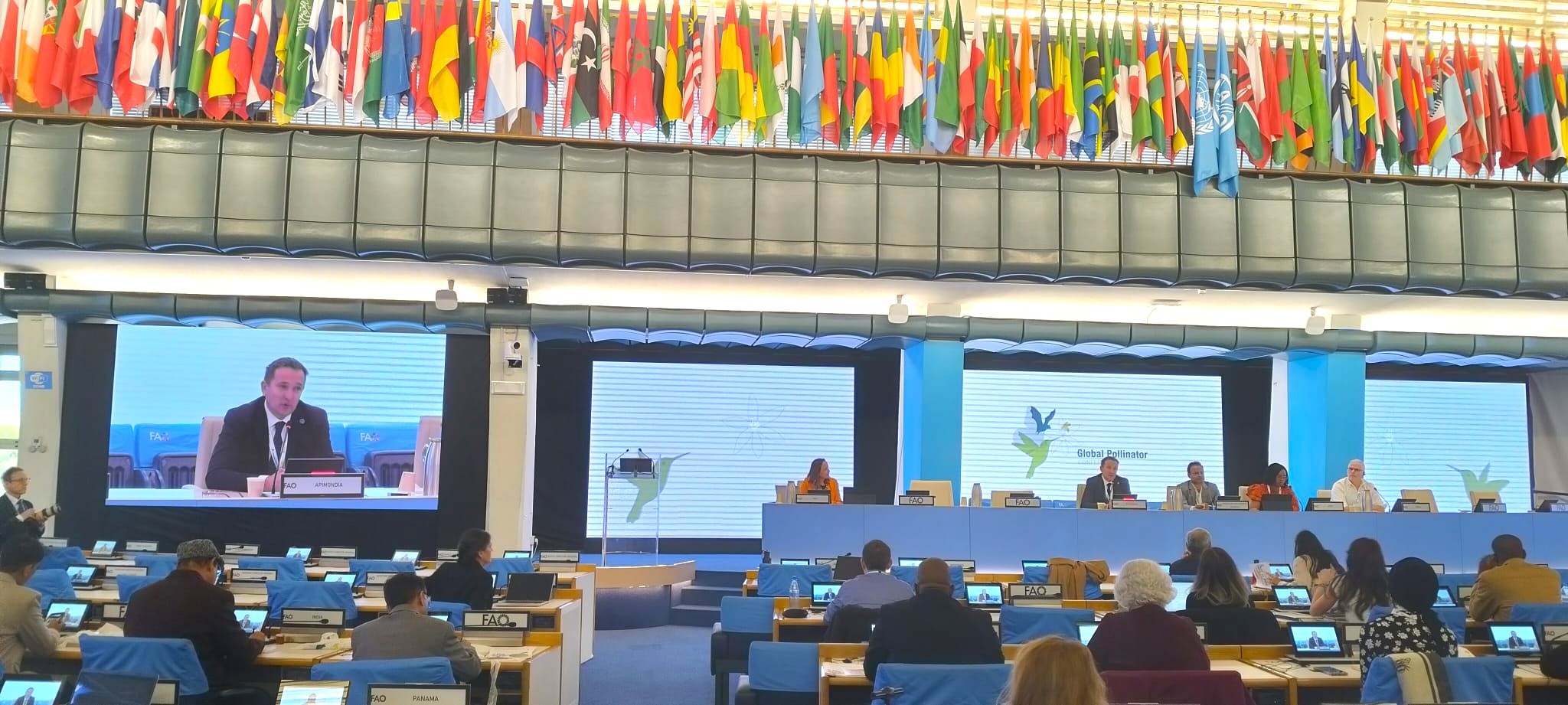
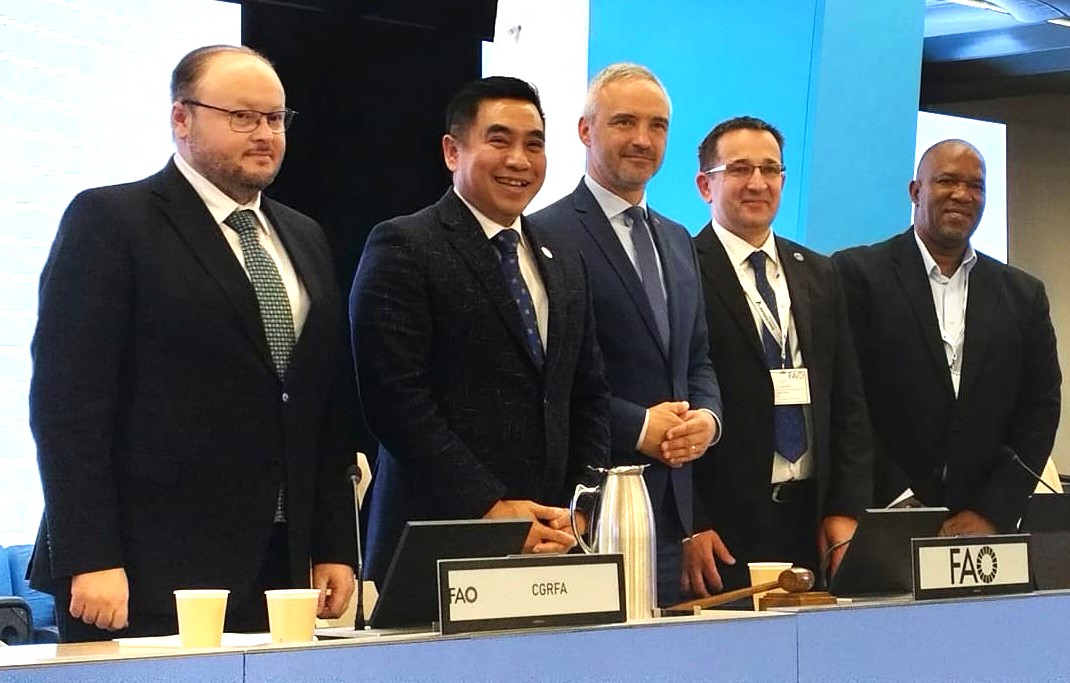
On 5 November, at FAO Headquarters in Rome, the Global Pollinator Conference held a high level consultation titled “Connecting science, policy and action: building a global platform for pollinators”. The session opened with a keynote by H.E. Janez Cigler Kralj, Minister of Agriculture of Slovenia. The panel brought together Mr Mustafa Abdurrazak Zakieh, Deputy Minister for Plant Resources of Syria, Mr Luthando Dziba, Executive Secretary of IPBES, and Apimondia Acting President Peter Kozmus, who spoke on behalf of beekeepers worldwide.
From science and policy to action
Ten years ago, the IPBES assessment gave the world a clear scientific picture of the pollinator crisis. Science has done its part, and continues to. Policy has responded with plans and commitments. The question for the platform, the Acting President reminded the audience, is the third word in its title: action. And action happens in the field, in apiaries, on farms, in landscapes.
The main message
A global platform for pollinators will only work if practitioners are inside it, not just informed by it. Beekeepers and farmers are not only beneficiaries of policy. They are the people who implement it, and the first to see whether it works.
Three concrete contributions from Apimondia
Apimondia is ready to be the practitioners’ pillar of the platform, connecting science, policy and beekeepers, in three ways.
- A network. Apimondia connects beekeepers’ associations on every continent. Through this network, knowledge can flow in both directions: science and policy can reach millions of beekeepers, and observations from the field can reach scientists and decision makers, including systematic data on colony health and losses.
- Capacity building. In many countries, especially in the Global South and in regions recovering from crisis, beekeeping is a low cost livelihood that requires little land and supports rural families, while delivering pollination for food security. Training and extension are where Apimondia and FAO can do much more together.
- Fair markets. Honey fraud undermines beekeepers’ income worldwide. If beekeeping is not economically viable, we lose beekeepers, and with them pollination and our eyes in the field. Stronger authenticity standards, building on the Codex framework, are not only a trade issue: they are a pollinator conservation issue.