Apitherapy is a natural medical approach and a recognized part of integrative medicine. It is based on the use of products originating from the beehive.
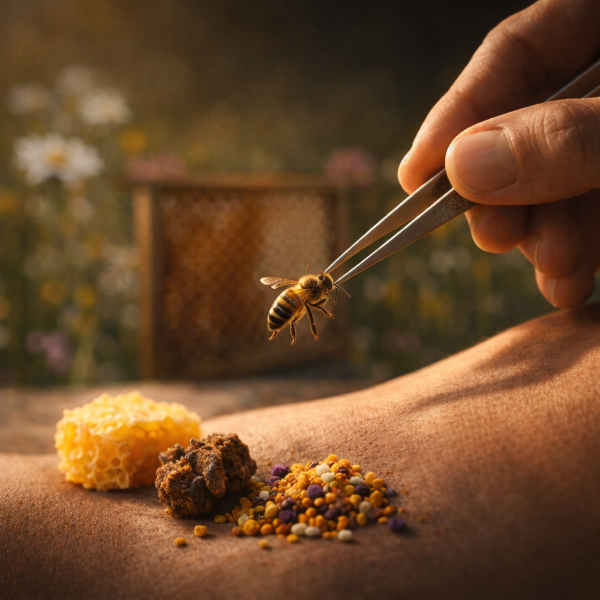
In different parts of the world, apitherapy is practiced and regulated in various ways. The term apitherapy was coined in the United States in 1935 by Dr. Bodog F. Beck. At that time, it referred specifically to bee venom therapy using direct bee stings. Later, the concept of apitherapy became broader and now includes the use of honey, pollen, bee bread, propolis, royal jelly, beeswax, bee venom, drone and queen larvae, dried worker bees, vax moth larvae, hive air and all other effects resulting from proximity to a bee colony, such as example sound and vibration.
As part of integrative medicine, apitherapy is regulated differently across countries. In some countries, after obtaining a medical university degree, researchers can pursue PhD studies in the field of apitherapy. In other countries, medical universities offer courses in apitherapy, while elsewhere various universities provide complementary or continuing education programs. In some regions, apitherapy is practiced within the profession of naturopathy.
Research, including controlled and randomized clinical trials, has shown positive effects of apitherapy, including during the COVID-19 period.
As a natural therapeutic method, apitherapy can provide significant benefits for people of all ages, from children through adults to elderly individuals. Its application spans from everyday use (api-nutrition) through prevention, treatment, and rehabilitation.
Knowledge development in apitherapy covers all levels: basic research, the investigation of the properties of bee products, case studies, and clinical trials. These activities increase the value of bee products and contribute to greater appreciation of beekeepers’ work.
Our approach is built on the collective knowledge of Apimondia member organizations worldwide. By connecting diverse experiences and expertise, we foster synergy—where combined knowledge creates greater value than individual contributions alone.
Our mission is to help people gain reliable, evidence-based knowledge about apitherapy as a natural approach to health. We aim to raise awareness and appreciation of beehive products and their role in supporting health, balance, and longevity for both humans and animals, in harmony with the World Health Organization’s vision for integrative medicine.

The effects of apitherapy can be classified into several levels:
The highest scientific level is represented by systematic reviews, which filter and draw conclusions by subjecting to detailed critique repeated clinical trials investigating the same phenomenon—ideally conducted independently at multiple sites. Here, a truly independent organizational investigation could provide a guarantee.
Apitherapy is closely linked to other areas of bees and beekeeping. Achieving excellent health effects is only possible with:
Accordingly, apitherapeutic applications require a broad knowledge base, in addition to adhering to the varying legal regulations in each country.
Dr János Körmendy-Rácz
Vice-president of the Speciality Comittee of Apitherapy at the World Federation of Chinese Medicine Associations
President of the Hungarian Apitherapy Association
Hungary
Dr. Cristina Mateescu PhD.
2015 – 2023 President of the Scientific Commission of Apitherapy of APIMONDIA
2016 – National Institute of Research and Development for Food Bioresources – IBA Bucharest
2011 – 2015 vice-president of the Scientific Commission of Apitherapy
2010 – Institute of Apicultural Research and Development
Prof. Li Wanyao
Professor of Traditional Chinese Medicine, Guangzhou University of Chinese Medicine, doctoral supervisor.
Prof. dr. Badiaa Lyoussi
Head of Laboratory of Natural Substances, Pharmacology, Environment, Modeling, Health and Quality of Life (SNAMOPEQ),
University Sidi Mohamed Ben Abdallah, Fez
dr. MD. Cristina Aosan
Dr. Nicolas Cardinault PhD.
PhD in human nutrition from medicine faculty of Clermont-ferrand, France
Asst. Prof. Dr. MD. Ali Timuçin Atayoğlu
Medipol University, Istanbul
Dr. Vet. María Alejandra López Pazos
Veterinary Physician
Dipl. Chinese Medicine; Apitherapist