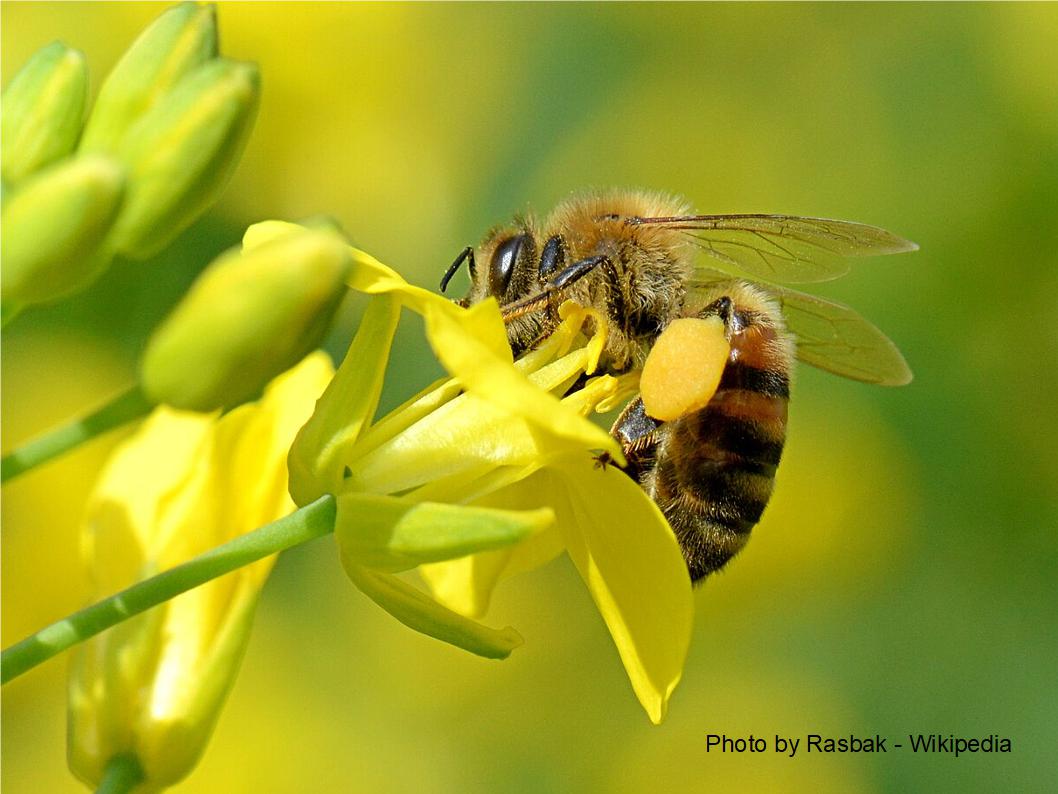
Пестициды считаются одной из самых серьезных угроз для медоносных пчел и других насекомых, обитающих в сельскохозяйственных ландшафтах. Но могут ли медоносные пчелы на самом деле избегать зараженных цветов? Согласно новому научному исследованию, опубликованному в журнале Scientific Reports, ответ может быть положительным.
Исследователи из Университета Буэнос-Айреса в лабораторных условиях выяснили, способны ли пчелы распознавать пыльцу, загрязненную небольшими дозами пестицидов, в частности глифосата и имидаклоприда.
Вновь появившихся пчел выращивали в клетках, где им давали стандартный сахарный сироп и два образца пыльцы различных видов растений - как диких, так и культурных, включая рапс - один загрязненный, а другой незагрязненный.
Пчелы проявляли меньшее предпочтение к загрязненной пыльце. Потребление снизилось на 10% - 23% в случае глифосата, и на 12% - 20% для имидаклоприда.
Полученные данные свидетельствуют о том, что пчелы могут обнаруживать и, по крайней мере частично, избегать загрязненной пыльцы. Это позволяет надеяться, что такое поведение может представлять собой естественную стратегию защиты от загрязнения окружающей среды.
Однако проблема пестицидов остается серьезной. Даже в контролируемых лабораторных условиях пчелы не полностью избегали загрязненной пыльцы. А в реальных условиях избегание также зависит от наличия незараженных цветов, что не всегда гарантировано.
Читайте полный текст научной статьи здесь.