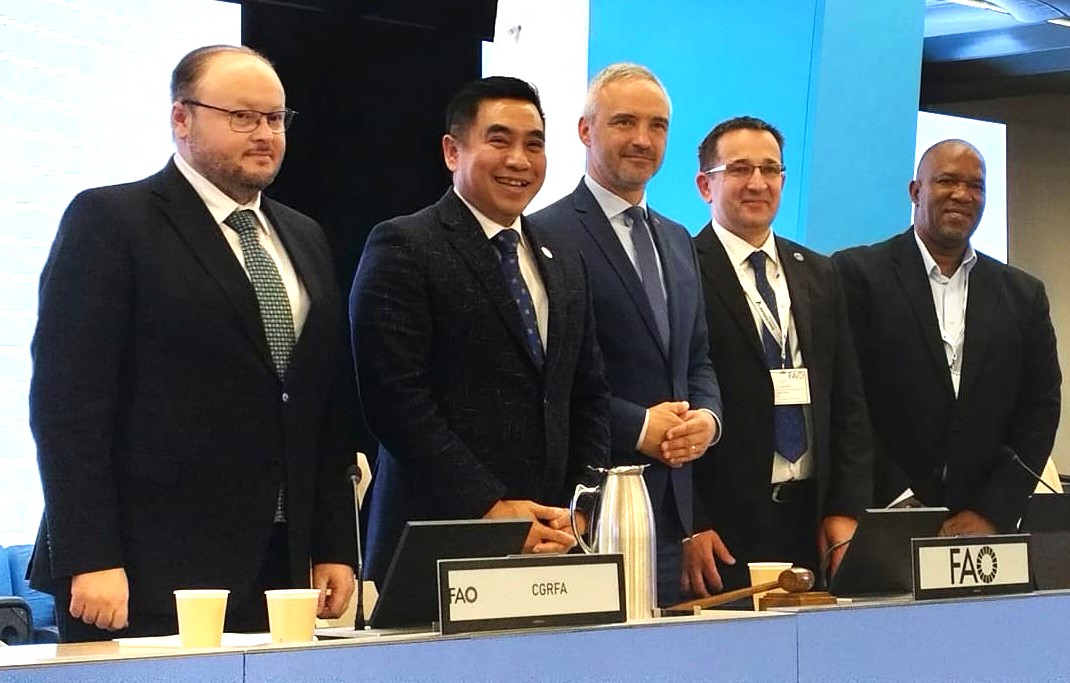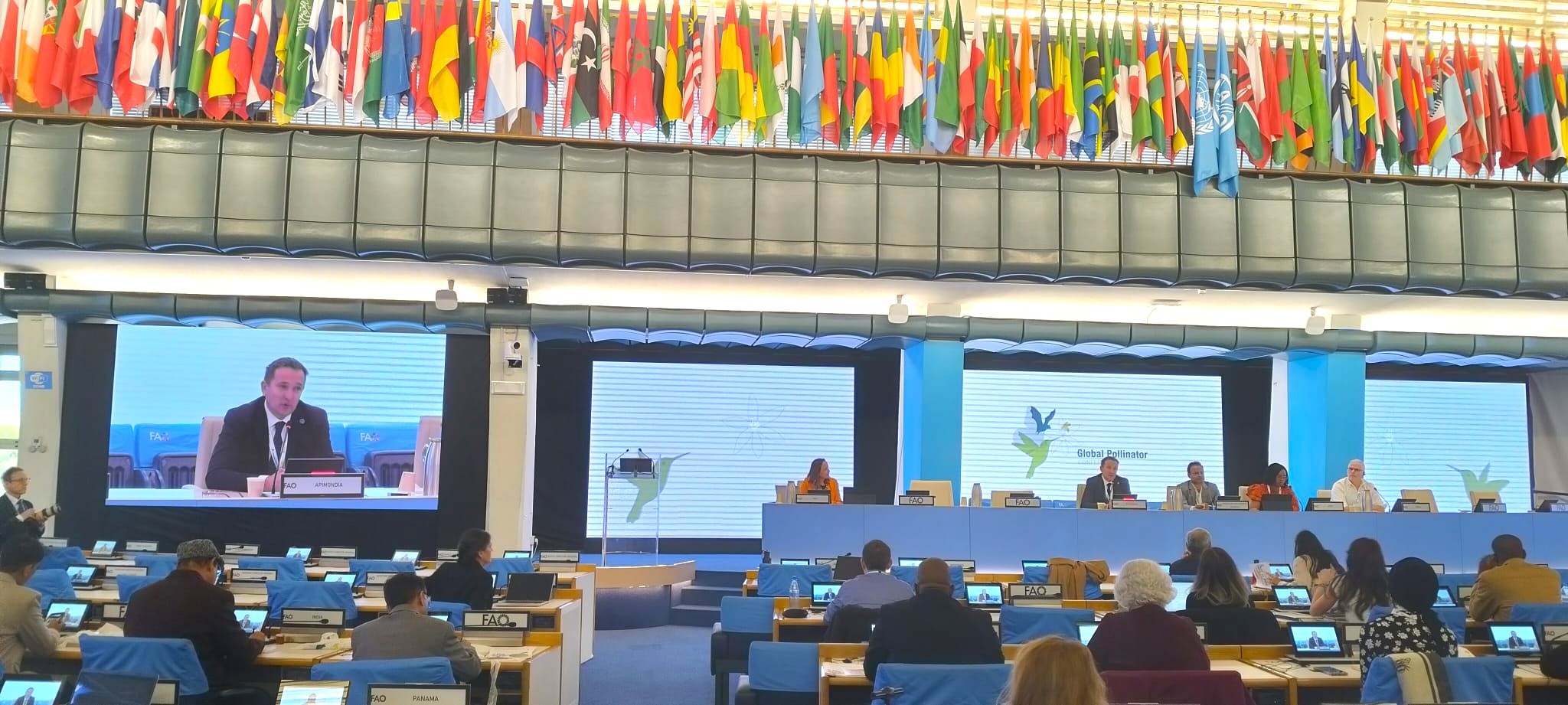
On 6 November, the second day of the Global Pollinator Conference at FAO Headquarters in Rome began with an interactive session, “Towards a Global Pollinator Platform: key elements”. It was co moderated by Apimondia Acting President Peter Kozmus and Ms Hien Ngo of the Secretariat of the FAO Commission on Genetic Resources for Food and Agriculture.
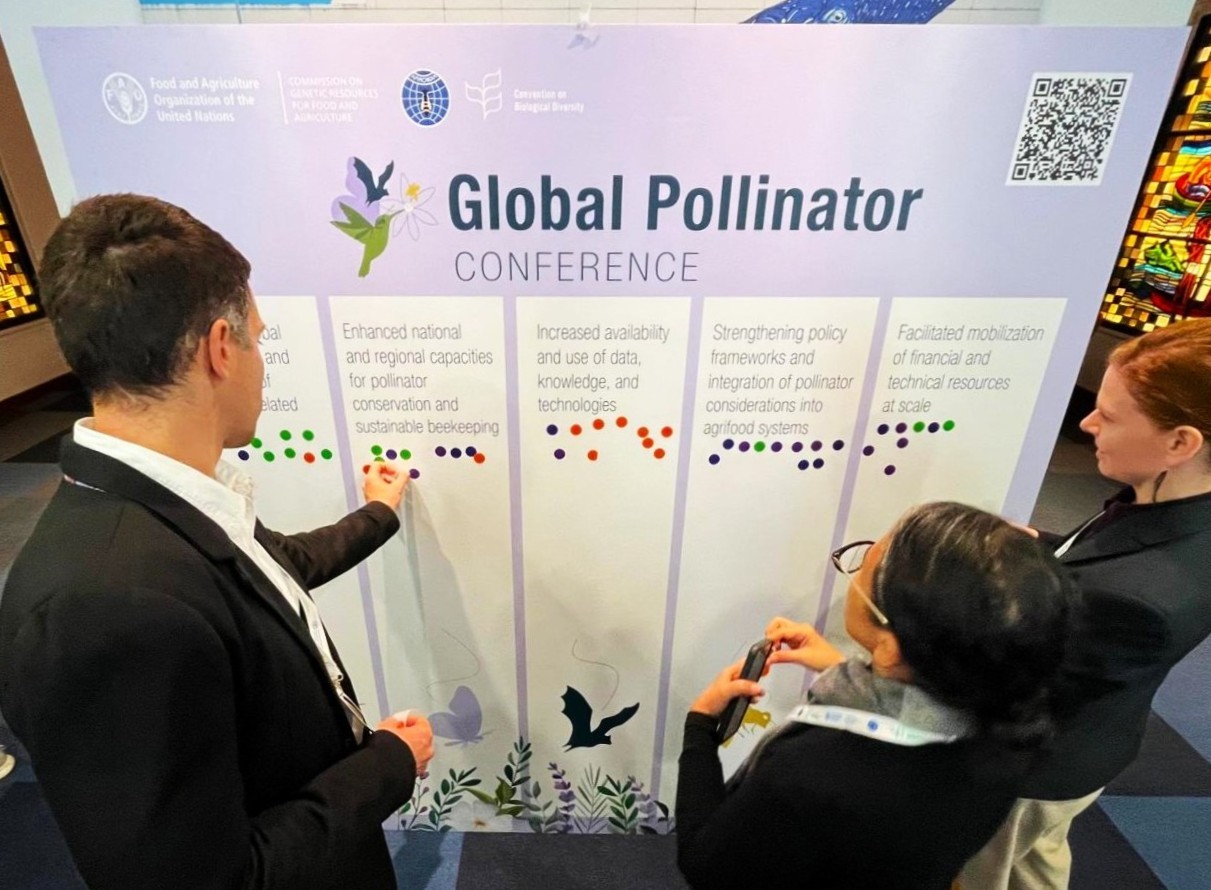
The Global Pollinator Platform is a new mechanism for coordinated global action on pollinator conservation and sustainable management. The question for this session was a practical one: how can the Platform actually work? Instead of one way presentations, the session was designed to find answers through interaction with the audience, with a long and lively discussion on the Platform’s vision, objectives, priorities, means of implementation, mechanisms for collaboration and an indicative timeline for a phased approach.
The discussion built on the key points that emerged from the first consultation:
- The Platform should consolidate fragmented information and link it to practical action.
- Databases, policy repositories and information on pesticides and management practices were seen as priority services.
- Outputs should be adapted to different environmental, production and institutional contexts.
- Successful models should be documented and made visible for contextual adaptation elsewhere.
- Farmers, local associations and grassroots organisations must be central to implementation.
- Governance and sustainable financing are essential from the outset.
Although the discussion will continue beyond today, the following main functionalities were identified as priority:
- address knowledge gaps and basic data
- support the implementation of pollinator related goals and targets at a national and subnational scale
- support awareness raising, education and communication on pollinator and pollination related topics
- support decision making processes and policies
- support knowledge sharing and the coordination of databases and information
And, above all, the platform should be inclusive and involve the voices and opinions of all relevant stakeholders.