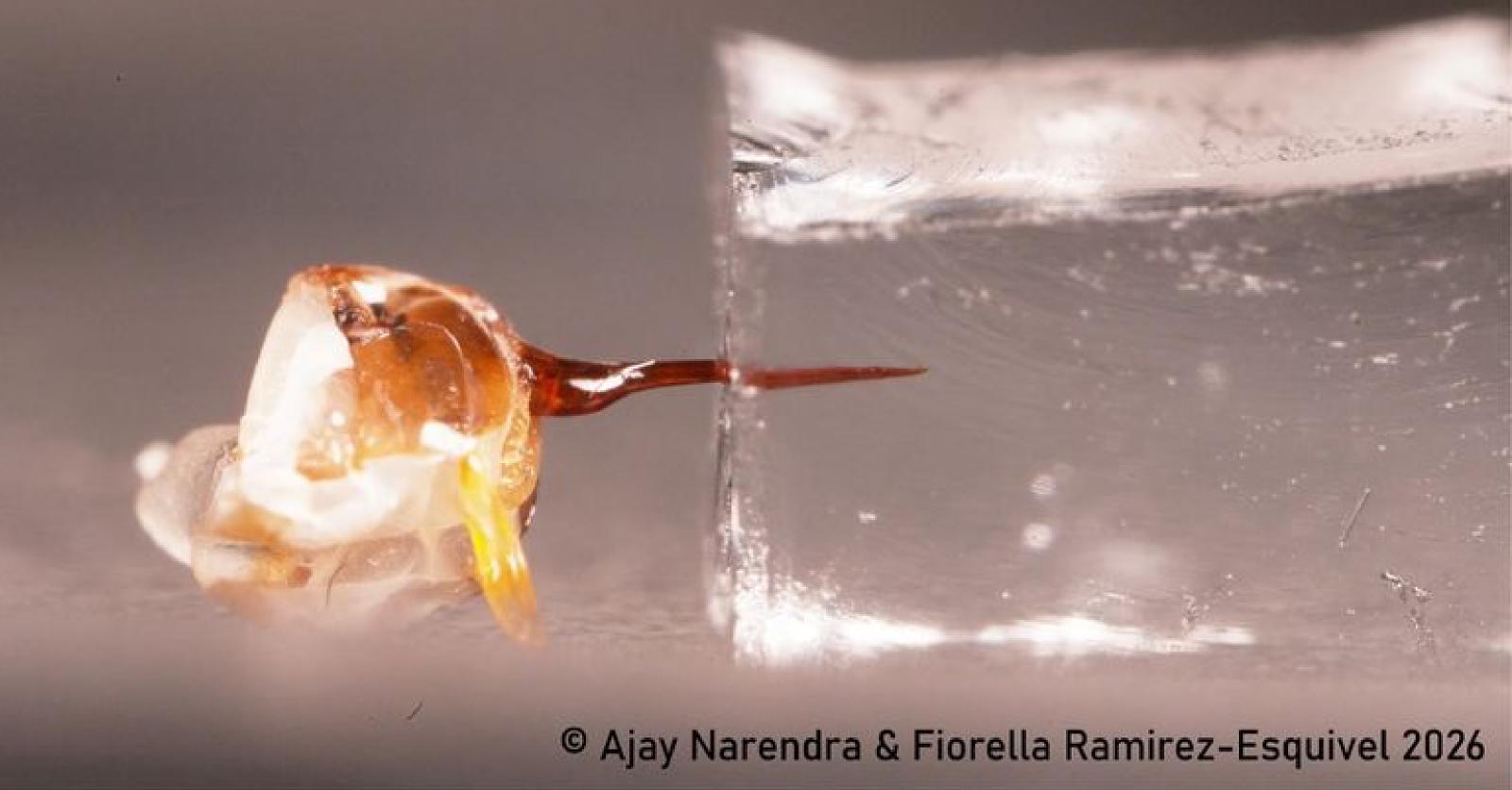
We know very well that a honey bee’s stinger continues to pump venom even after it has been separated from the bee’s body. But how does it do that? A new Australian study – conducted using high-speed videography, micro-computed tomography, and physical modelling – has revealed that the stinger functions as a unique micropump.
This system employs two deformable pistons operating in antiphase within a single chamber. The dynamic deformation of the pistons allows them to alternately seal, collapse, and pass one another, enabling continuous venom flow while preventing backflow.
According to the authors, this study could also inspire the design of microfluidic pumping devices.
Watch the video
Go to the scientific paper here.