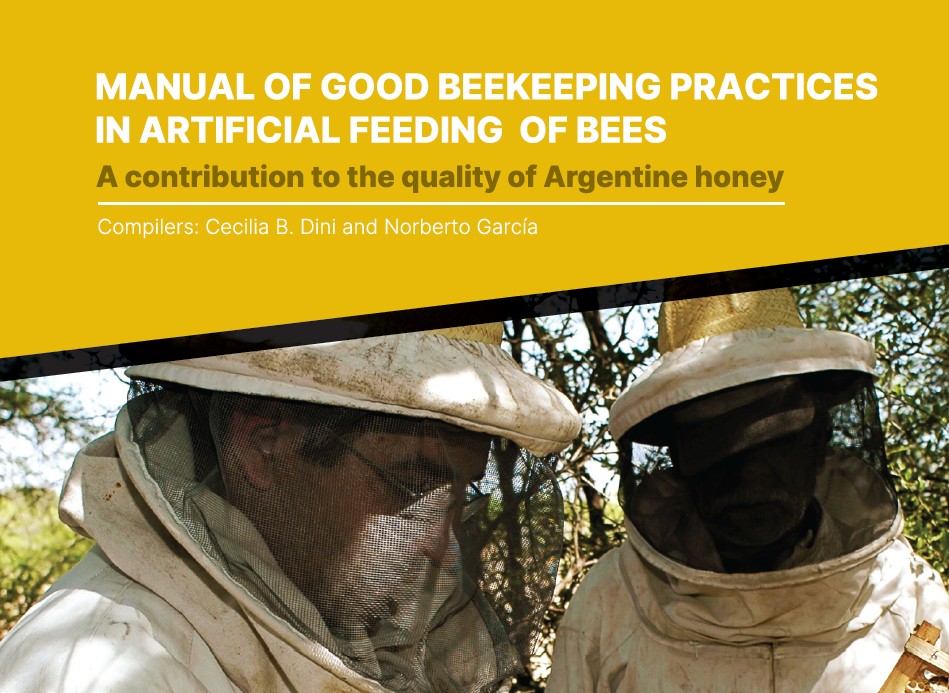
The current Manual of Good Beekeeping Practices in Artificial Feeding of Bees was developed to overcome the new challenges derived from the combat against honey fraud.
Honey fraud has strongly adversely affected the international market in recent years. The problem is so serious that Apimondia, in complete alignment with internationally accepted honey standards, has published a set of important Statements, aimed to constitute a robust conceptual framing of licit modes of honey production and the correct use of the name honey.
The detection of novel honey adulteration practices is currently possible because of the constant development of new and more sensitive technologies aimed to detect the presence of foreign sugars in honey. However, such foreign sugars can both originate from dishonest practices or from the accidental contamination of honey with products used to artificially feed bees.
Artificial bee feeding is a helpful and strategic practice, commonly employed all over the world. The expansion of agricultural activities and climate change have boosted the usage of this useful tool in recent years. In order to prevent honey from being rejected when tested by the current so sensitive analytical framework, it becomes vital to instruct honest beekeepers in good artificial bee feeding practices.
Both Apimondia and the contributors of this Manual aim to offer honest beekeepers the necessary concepts and appropriate tools to preserve the quality and prestige of their honey, while protecting them from eventual unjust accusations of dishonesty.
Manual in English
Manual in Spanish