Como podemos proteger a saúde das abelhas se ainda não temos os dados necessários para orientar as decisões?
O Grupo de Trabalho da APIMONDIA sobre Boas Práticas Veterinárias na Apicultura (AWG-GVPA) publicou Resumo de políticas #6: Lacunas de investigação na medicina veterinária — Identificação das áreas que necessitam de mais dados. Identifica as lacunas de conhecimento mais críticas que impedem a apicultura baseada em evidências e apela a uma ação internacional coordenada para as resolver.
PORQUÊ ISTO É IMPORTANTE
A tomada de decisão veterinária na apicultura é demasiado frequentemente baseada em evidências incompletas, fragmentadas ou específicas de uma região. Múltiplos fatores de stress que interagem continuam a levar a perdas de colónias, mas a contribuição relativa de patógenos, parasitas, fatores ambientais e práticas de manejo ainda não é suficientemente compreendida em todas as regiões. Sem dados melhores, a prevenção fica aquém, as decisões de tratamento são comprometidas e o desenvolvimento de políticas estagna.
AS LACUNAS ESSENCIAIS
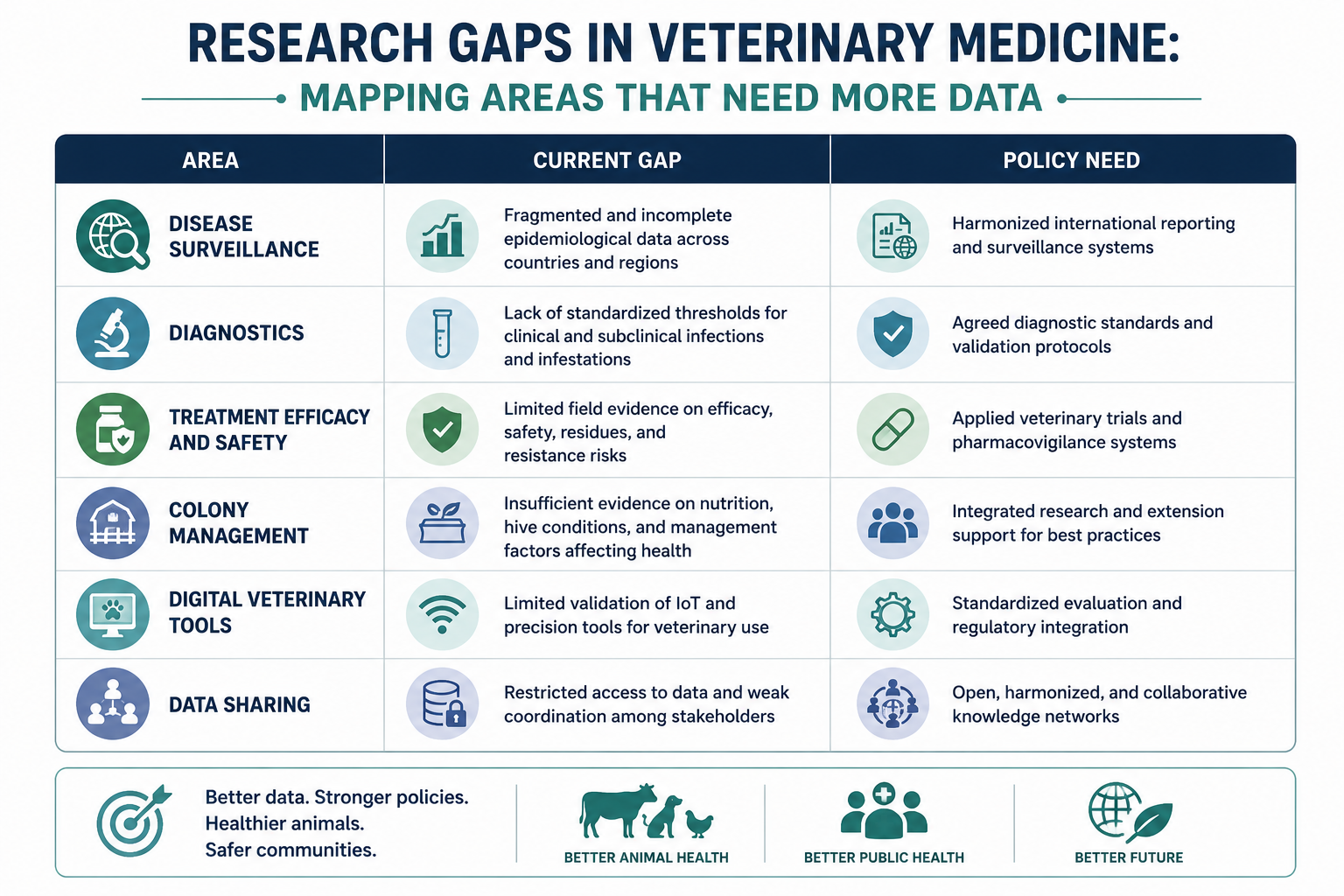
O memorando descreve seis áreas prioritárias onde a evidência é urgentemente necessária:
1/ Vigilância de Doenças: Dados epidemiológicos fragmentados e incompletos entre países e regiões.
2/ Diagnósticos: Não há limiares normalizados para infeções e infestações clínicas e subclínicas.
3/ Eficácia e Segurança do Tratamento: Evidência limitada em campo sobre a eficácia, segurança, dinâmica de resíduos e riscos de resistência de medicamentos veterinários para abelhas.
4/ Gestão de Colónias: Evidência insuficiente sobre como a nutrição, as condições da colmeia e as práticas de gestão afetam os resultados de saúde da colónia.
5/ Ferramentas Veterinárias Digitais: A monitorização de colmeias baseada em IoT, abordagens de microbioma e terapêuticas inovadoras carecem de dados de campo padronizados e de acesso aberto.
6/ Partilha de dados: Acesso restrito a dados e fraca coordenação entre as partes interessadas chave.
O IMPACTO ESP
Abordar estas lacunas irá melhorar a prevenção de doenças, os diagnósticos e as decisões de tratamento em todo o setor. Irá fortalecer o reconhecimento da apicultura no âmbito da medicina veterinária e dos quadros da One Health, apoiar uma melhor governação e regulação baseada em evidências. Consequentemente, estes esforços podem, em última análise, contribuir para populações de abelhas mais saudáveis, serviços de polinização mais resilientes e maior confiança dos consumidores nos produtos apícolas.
Conforme o resumo o diz de forma simples: Melhores dados. Políticas mais fortes. Abelhas mais saudáveis. Comunidades mais seguras.
Leia o Resumo da Política completo aqui.