Nova investigação de campo sugere que a adição de uma pequena quantidade de molibdénio – um oligoelemento essencial – à ração das colónias pode ajudar as rainhas das abelhas a emergirem mais pesadas, embora ainda se tenha de verificar se isto significa rainhas com melhor desempenho.
Investigadores da Apinov (Centro Francês de Apicultura Científica e Formação) e do Institut Lavoisier de Versailles, afiliado ao CNRS, testaram um suplemento à base de molibdénio em duas colmeias francesas, comparando colónias suplementadas com um controlo alimentado com xarope simples ao longo de uma época completa de criação de rainhas.
A Importância da Qualidade da Rainha: A condição física da rainha no momento em que é criada tem sido utilizada por apicultores e investigadores como um sinal precoce de como irá desempenhar posteriormente, incluindo a sua capacidade de acasalar com sucesso, armazenar esperma e viver uma vida longa e produtiva.
O Que EncontraramAs rainhas de colónias suplementadas emergiram, em média, mais pesadas, uma diferença que se manteve em todos os locais e réplicas. Não surgiram efeitos consistentes no comprimento das células reais, nas medições corporais ou na produção de geleia real.
O que pode significar — e o que ainda não significa: Criadores de rainhas usam frequentemente emergência como indicador precoce do desenvolvimento da rainha, associada em outros estudos ao desempenho reprodutivo, mas os autores fazem questão de notar que o peso por si só não é um indicador completo da qualidade da rainha, e uma rainha mais pesada na eclosão não é o mesmo que uma rainha comprovadamente melhor em campo.
A Conclusão: Trata-se de um estudo de campo pequeno, com uma única estação (três réplicas em dois apiários) e os autores são explícitos que deve ser lido como evidência preliminar, não como um achado consolidado. Os autores chamam-lhe preliminar e os próximos passos serão a realização de estudos maiores, multianuais, que acompanhem as rainhas ao longo do acasalamento e do desempenho da colónia.
Nota: O estudo foi parcialmente financiado por uma empresa detentora de patente do suplemento e com planos de o comercializar — divulgado de forma transparente pelos autores.
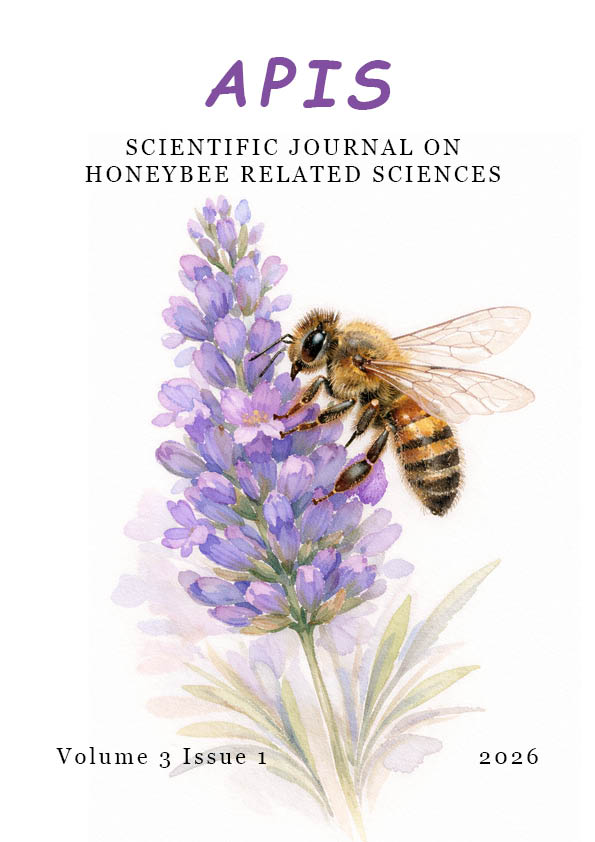
O estudo faz igualmente parte da edição recentemente publicada de APIS, onde o Dr. János Körmendy-Rácz, Presidente da Comissão de Apiterapia da Apimondia, desempenha o cargo de editor-chefe responsável.
📄 Ler o estudo completo: Cochard et al. (2026), APIS, 3(1). DOI: 10.62949/03917161.0581147