The 9th International Muğla Beekeeping and Pine Honey Congress, held in Marmaris, Türkiye, from 19 to 22 November 2026, has come to a close. Apimondia was there to represent the voice of beekeepers and to share knowledge across the fields in which the Federation works.
Thank you to the organisers
We are deeply grateful to the organisers for their warm hospitality and for bringing together beekeepers, scientists and institutions to discuss the technical and economic problems of beekeeping in Türkiye and in the world.
Thank you to our representatives
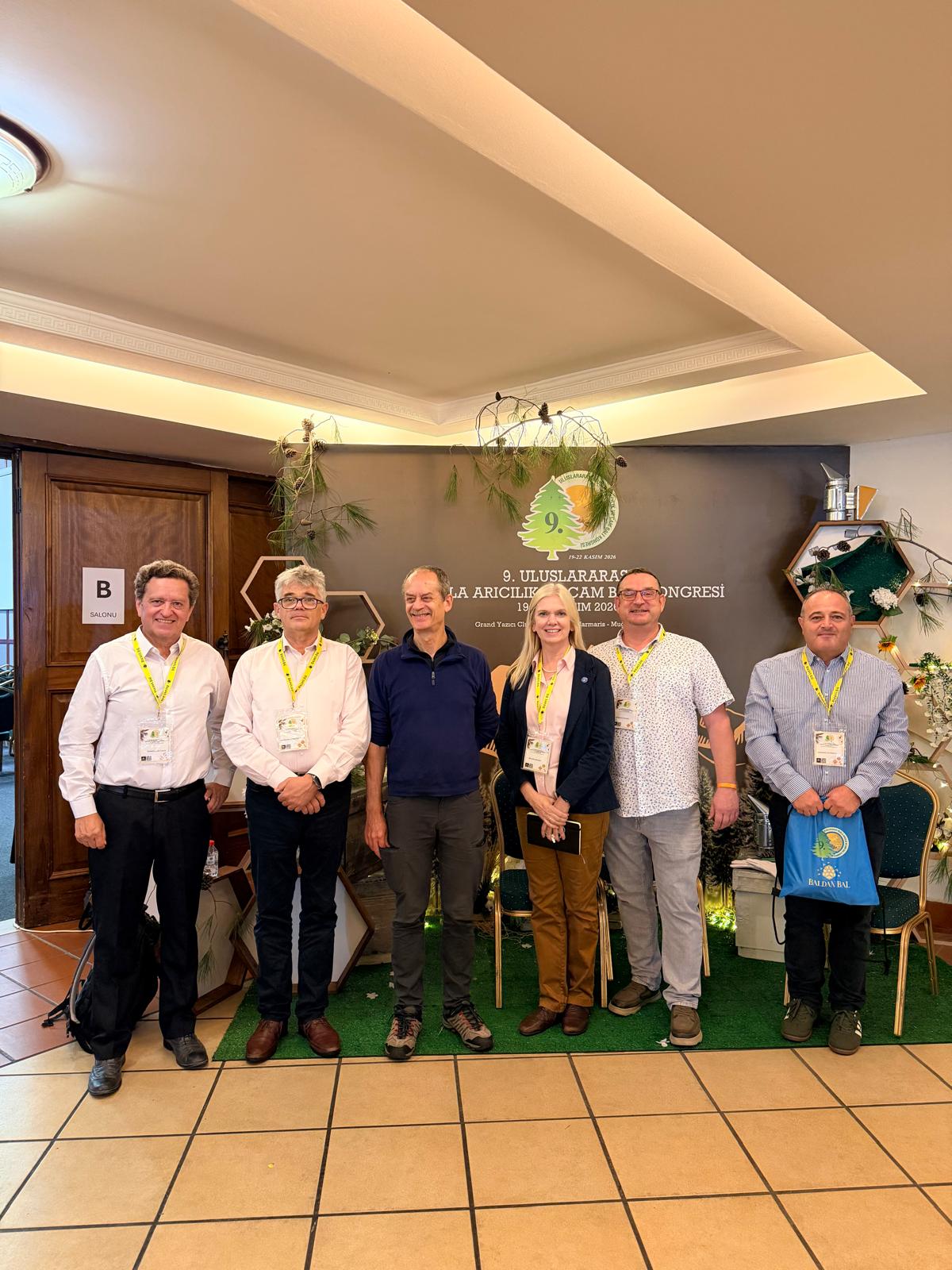
Six members of the Apimondia Executive Council joined in person and presented on their areas of expertise:
- Riccardo Jannoni-Sebastianini, Secretary General
- Dr János Körmendy-Rácz, Chair of the Scientific Commission on Apitherapy
- Norberto Luis Garcia, Chair of the Scientific Commission on Beekeeping Economy
- Dr Gennaro Di Prisco, Chair of the Scientific Commission on Bee Biology
- Megan Denver, Chair of the Scientific Commission on Beekeeping for Rural Development
- Dr Robert Chlebo, Chair of the Regional Commission for Europe
Key outcomes
Apitherapy. “Living with Bees: From Beekeeping Risks to Home Apitherapy” reminded beekeepers that clothing and gloves touched by bee venom can make family members allergic, and that the spores of chalkbrood and stonebrood can make people ill. The talk also presented home use of products selected from 13 apiary products.
Beekeeping Economy. “Mitigating the Damage of Honey Fraud on Commercial Beekeeping” showed that laboratory methods must keep pace with a sophisticated adulteration industry, and that traceability, audit strategies and attention to economic anomalies are needed too. Apimondia is working to improve the tools against honey fraud.
Beekeeping for Rural Development. “Making the Development of Beekeeping Economically Unsustainable in Under Developed Countries” highlighted how low cost honey imports are making life difficult for small scale beekeepers in Africa, threatening rural livelihoods.
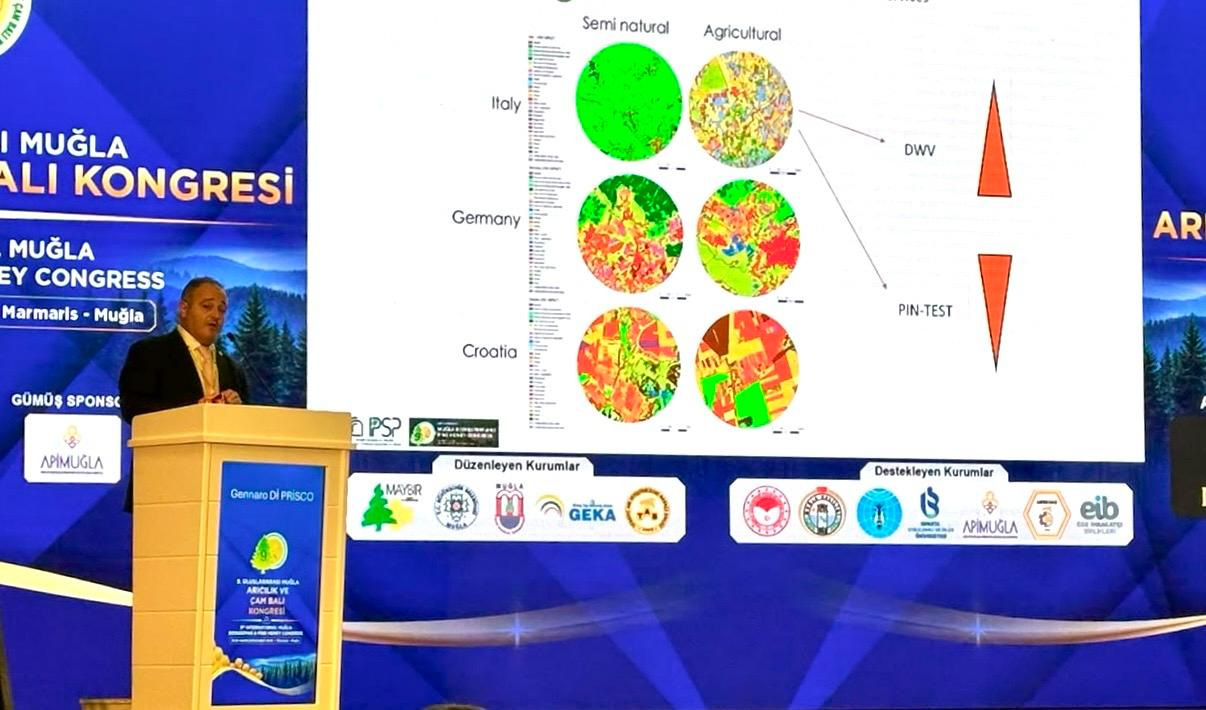
Bee Biology. “Nutrimmunity as a Driver for the Right Honey Bee Selection” explained that climate change, particularly high temperatures, is a major threat to honey bee colonies worldwide, and that nutrition plays a key role in strengthening bee immunity. Including nutritional and immune related traits in the evaluation of apiaries could improve selection and breeding schemes.
Europe. “Beekeeping in Europe” explained that the main challenge is honey profitability rather than production. Online lecture series with simultaneous interpretation are planned for 2027.
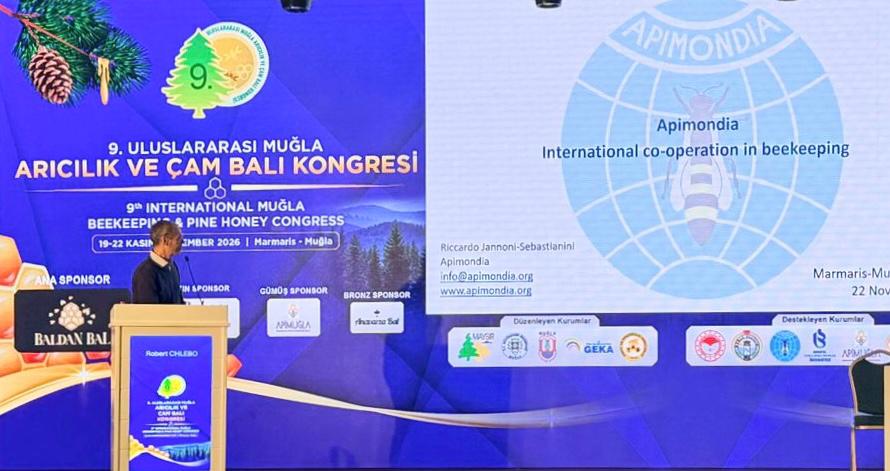
International co-operation. “Apimondia: International Co-operation in Beekeeping” illustrated international and regional events in which Apimondia was directly involved with FAO and in Africa and Central Asia, together with the activities carried out for EU funded projects in Europe. It also showed the growth in communication, with the weekly Apimondia Newsletter and a significantly higher number of news items on the Apimondia website since its renewal in February 2026.
Get in touch with the Commissions
Each Commission welcomes contact from beekeepers and institutions: apitherapy@apimondia.org, economy@apimondia.org, beebiology@apimondia.org, ruraldevelopment@apimondia.org و europe@apimondia.org.
Working for beekeepers
Whatever the topic, the message was the same: beekeeping faces challenges that cross borders, and so should our cooperation. Apimondia will keep working for beekeepers around the world.